
Nail Pops Dotting the Wall or Ceiling? What's Pushing Them Out

August 18, 2026

A licensed asbestos inspector or industrial hygienist will collect one or more small samples from the ceiling using proper containment procedures. Those samples are sent to an accredited laboratory that analyzes them under polarized light microscopy. Results are typically returned within a few days and clearly identify whether asbestos fibers are present and at what percentage.


Homeowners should never attempt to collect samples themselves. Improper sampling can release fibers into the home and expose occupants to the very risk they were trying to assess.

Quick Answer: Nail pops show up when the wood framing behind your drywall shrinks and pulls away from the fastener holding the board in place, leaving the nail or screw head pressing forward until it breaks through the paint and paper. It is almost always a framing movement issue, not a sign the drywall itself failed, and covering the bump with spackle only hides it until the same fastener works loose again. A lasting fix pulls or resets the fastener, re-anchors the board into solid framing, and rebuilds the surface so the spot disappears for good.


You notice it while you are vacuuming, or maybe while the afternoon sun rakes across the living room wall at just the right angle. A small round bump, sometimes with a faint ring of cracked paint around it, sitting right where a fastener should be invisible. A week later there is another one a few feet away, then one on the ceiling near the hallway. None of them are painful to look at individually, but a wall dotted with little raised dots starts to look neglected fast, and scraping one off with a putty knife only proves the point when the paint chips instead of coming away clean.


Nail pops are one of the most common drywall complaints in homes across Ramona, Poway, Escondido, and the rest of inland San Diego County, and they follow a predictable pattern once you understand what is actually moving behind the wall. The short version is that the fastener is not pushing itself out. The wood around it is pulling away, and the fastener is simply staying put while everything else shifts.

What a Nail Pop Actually Is

When drywall goes up, each panel is fastened directly into the wood studs and ceiling joists behind it, either with ring-shank nails or drywall screws. The fastener head gets set slightly below the surface, then covered with joint compound so it disappears under the paint. That connection is what holds the sheet flat and tight against the framing.


Wood framing is never fully dry when a house is built. Lumber continues losing moisture for months, sometimes years, after it goes up, and as it dries it shrinks, mostly across its width and thickness rather than its length. That shrinkage pulls the face of the stud or joist slightly away from the drywall. The fastener, which is anchored into the wood, does not travel with it. Instead the wood retreats around the fastener shank, and the head that used to sit flush now sits slightly proud of the surface. The joint compound covering it can only stretch so far before it cracks and the metal head telegraphs through the paint as a small bump or ring.


Nails and screws behave a little differently here. A smooth nail can work partway back out of the wood as the framing shrinks and flexes, especially if it was not set with enough holding power to begin with. A screw threads into the wood and grips harder, so it resists backing out on its own, but it can still pop if the wood around the threads shrinks enough to loosen the bite. That is one reason many finishers lean on screws for repairs even in homes that were originally nailed, since a properly driven screw has more resistance to this kind of movement.

Why Framing Keeps Moving Long After the House Is Built

New construction sees the heaviest wave of nail pops in the first one to three years, simply because the framing lumber is still shedding moisture from milling and shipping. But older homes are not immune. Wood is hygroscopic, meaning it constantly absorbs and releases moisture based on the humidity around it, and that exchange never fully stops.


San Diego County's inland communities run through a wide seasonal swing. Winters bring damp air and rain that let framing take on a bit of moisture, while the long dry stretch from late spring through fall, especially during Santa Ana wind events, pulls that moisture right back out. Each cycle makes the wood expand slightly and then contract again, and every contraction tugs a little more at the fasteners holding your drywall. Homes built with stucco exteriors and interior wood framing feel this cycle strongly, since the framing behind an exterior wall is exposed to bigger temperature and humidity swings than an interior partition.


Add the region's periodic ground shifting from minor seismic activity and ordinary house settling, and you get a second source of movement layered on top of the seasonal one. A stud that flexes slightly during a tremor or a gradual settling event can loosen a fastener's grip in an instant rather than gradually, which is why some homeowners notice a cluster of new pops appear seemingly overnight.

Where Pops Tend to Cluster and Why

Nail pops rarely spread randomly across a wall. They tend to line up in a pattern that tells you something about the framing behind the surface.


A vertical row of small bumps usually marks a single stud, showing every fastener along that stud's length reacting to the same shrinkage. A pop that shows up right at a wall-to-ceiling corner or along a butt joint between two sheets of drywall is often tied to truss uplift, a seasonal flexing of roof trusses that can lift the ceiling drywall slightly away from the top plate of the wall. Popcorn or heavily textured ceilings tend to hide this movement for a while, then reveal a cluster of pops all at once when the texture finally cracks along the stress line.


Garages and rooms with less climate control, like a converted garage or a bonus room without full insulation, often show more pops than the rest of the house because the framing there experiences a wider temperature and humidity range day to day.

Tip: Before you touch a single pop, grab a flashlight and shine it across the wall at a low, raking angle in a dark room. This lights up every bump and hairline crack you would otherwise miss under normal lighting, and it lets you map out whether the pops are scattered or following a stud line before anyone starts repairing anything..

Why a Dab of Spackle Never Holds

The instinct with a nail pop is to push the fastener back in with a hammer, dab some spackle over it, and move on. That approach almost always comes back to bite you within a season or two, for a couple of reasons.


First, tapping the fastener back down does nothing about the wood that already shrank away from it. The framing is still short of where it used to be, so the fastener has nowhere solid to grip, and it is free to work its way forward again the next time the wood moves. Second, a fastener that has already broken the paper facing of the drywall has compromised the very thing that gives joint compound something to hold onto. Spackle bridges a small void reasonably well, but it is not designed to anchor a metal head that keeps trying to push through from behind.


The more durable approach treats the fastener itself as the problem, not just the bump on the surface. That typically means backing the old fastener out or driving it past the point of resistance, then placing a new screw a couple of inches away into solid, undisturbed framing to re-secure the panel. Once the board is anchored properly again, the old hole and the new screw both get covered, feathered out with a few thin coats of compound, sanded smooth, and blended into the surrounding texture so neither one is visible under any lighting.

Warning: Do not simply drive a screw wherever is convenient near a pop without checking what is actually behind the wall. Electrical wiring, plumbing lines, and HVAC ductwork often run through the same stud bays where pops appear, particularly near light switches, outlets, and ceiling fixtures. A screw driven blind into the wrong spot can puncture a wire or pipe and turn a cosmetic repair into a much bigger problem.

Texture Is Where a Repair Either Disappears or Gives Itself Away

Fixing the fastener solves the mechanical half of the problem, but the visible half depends entirely on matching the surrounding texture. A smooth patch on an orange peel or knockdown wall stands out immediately once the light hits it, even if the underlying repair is perfectly sound. Ceilings are especially unforgiving here, since a popcorn or heavy stipple finish is nearly impossible to blend by hand without practice, and a mismatched patch on a ceiling is often more noticeable than the pop it replaced.


A finisher who repairs pops regularly reads the existing pattern first, tests a small blend area, and reproduces the spray or trowel technique that created the original finish before painting over the spot. That last step is what makes a batch of repaired pops genuinely disappear rather than trading a row of bumps for a row of flat gray patches.

Why a Dab of Spackle Never Holds

A licensed asbestos inspector or industrial hygienist will collect one or more small samples from the ceiling using proper containment procedures. Those samples are sent to an accredited laboratory that analyzes them under polarized light microscopy. Results are typically returned within a few days and clearly identify whether asbestos fibers are present and at what percentage.


Homeowners should never attempt to collect samples themselves. Improper sampling can release fibers into the home and expose occupants to the very risk they were trying to assess.

The instinct with a nail pop is to push the fastener back in with a hammer, dab some spackle over it, and move on. That approach almost always comes back to bite you within a season or two, for a couple of reasons.


First, tapping the fastener back down does nothing about the wood that already shrank away from it. The framing is still short of where it used to be, so the fastener has nowhere solid to grip, and it is free to work its way forward again the next time the wood moves. Second, a fastener that has already broken the paper facing of the drywall has compromised the very thing that gives joint compound something to hold onto. Spackle bridges a small void reasonably well, but it is not designed to anchor a metal head that keeps trying to push through from behind.


The more durable approach treats the fastener itself as the problem, not just the bump on the surface. That typically means backing the old fastener out or driving it past the point of resistance, then placing a new screw a couple of inches away into solid, undisturbed framing to re-secure the panel. Once the board is anchored properly again, the old hole and the new screw both get covered, feathered out with a few thin coats of compound, sanded smooth, and blended into the surrounding texture so neither one is visible under any lighting.

Warning: Do not simply drive a screw wherever is convenient near a pop without checking what is actually behind the wall. Electrical wiring, plumbing lines, and HVAC ductwork often run through the same stud bays where pops appear, particularly near light switches, outlets, and ceiling fixtures. A screw driven blind into the wrong spot can puncture a wire or pipe and turn a cosmetic repair into a much bigger problem.

When Nail Pops Signal Something Bigger

Most nail pops are ordinary and cosmetic, tied to the normal give and take of wood framing through the seasons. A handful scattered around the house, especially in a home under five years old or in a converted garage, rarely means anything beyond routine shrinkage.


It is worth a closer look when pops show up in a tight cluster all at once rather than gradually, when they appear alongside new cracks that run diagonally from doors or windows, or when a ceiling starts sagging slightly in the same area where the pops are concentrated. Those combinations can point toward more active framing movement, moisture intrusion above the ceiling, or truss issues that go beyond what a basic fastener repair addresses, and they are worth having evaluated before the cosmetic work goes on top.

Frequently Asked Questions

  • Why do nail pops seem to appear more in some rooms than others?

    Garages, bonus rooms, and exterior-facing spaces experience greater temperature and humidity changes. These conditions cause framing wood to expand and contract more frequently, increasing movement around drywall fasteners and making nail pops noticeably more common there.

  • Will fixing one nail pop cause new ones to show up nearby?

    Repairing one nail pop does not cause others. Nearby pops usually appear because the same stud or joist continues experiencing seasonal movement, allowing additional fasteners along that section of framing to gradually loosen over time as well.

  • Can I tell the difference between a nail pop and something more serious just by looking at it?

    A typical nail pop appears as a small round bump centered over a fastener. Spreading cracks, soft drywall, visible sagging, or several sudden pops may indicate moisture or structural movement that requires a more detailed inspection.

  • Do screws really pop less often than nails?

    Yes, screws generally resist popping better because their threads grip wood fibers securely. During repairs, installers often place a drywall screw into solid framing near the popped nail, creating a stronger connection as framing naturally moves.

  • How many nail pops is considered normal in an older home?

    There is no specific number considered normal. A few isolated nail pops appearing gradually are generally common in older homes. Clusters that develop quickly, especially alongside cracks or sagging, may suggest more significant framing movement underneath.

  • Does painting over a nail pop without repairing it first cause more damage?

    Painting alone does not correct the loose fastener beneath the surface. Continued framing movement can push the bump through fresh paint again, often reopening cracks and making the repaired area increasingly noticeable as time passes afterward.

A Lasting Fix Starts Behind the Surface

Nail pops may look like minor surface flaws, but lasting repairs depend on correcting the loose fastener and securing the drywall properly to the framing behind it. With 20 years of experience, Gabe's Drywall understands how seasonal wood movement, settling, and changing indoor conditions can affect walls and ceilings in Ramona, CA. Addressing the underlying connection before refinishing the surface helps prevent the same raised spots from returning after another cycle of temperature and humidity changes over time.


Once the drywall is secure, careful finishing makes the repair blend naturally with the surrounding wall or ceiling. Matching existing orange peel, knockdown, smooth, or other textures is just as important as resetting the fastener itself, especially where angled light can reveal uneven patches. A properly completed repair should leave the surface looking consistent rather than drawing attention to where the problem once appeared. That combination of secure fastening and detailed finishing keeps nail pop repairs clean, subtle, and durable.

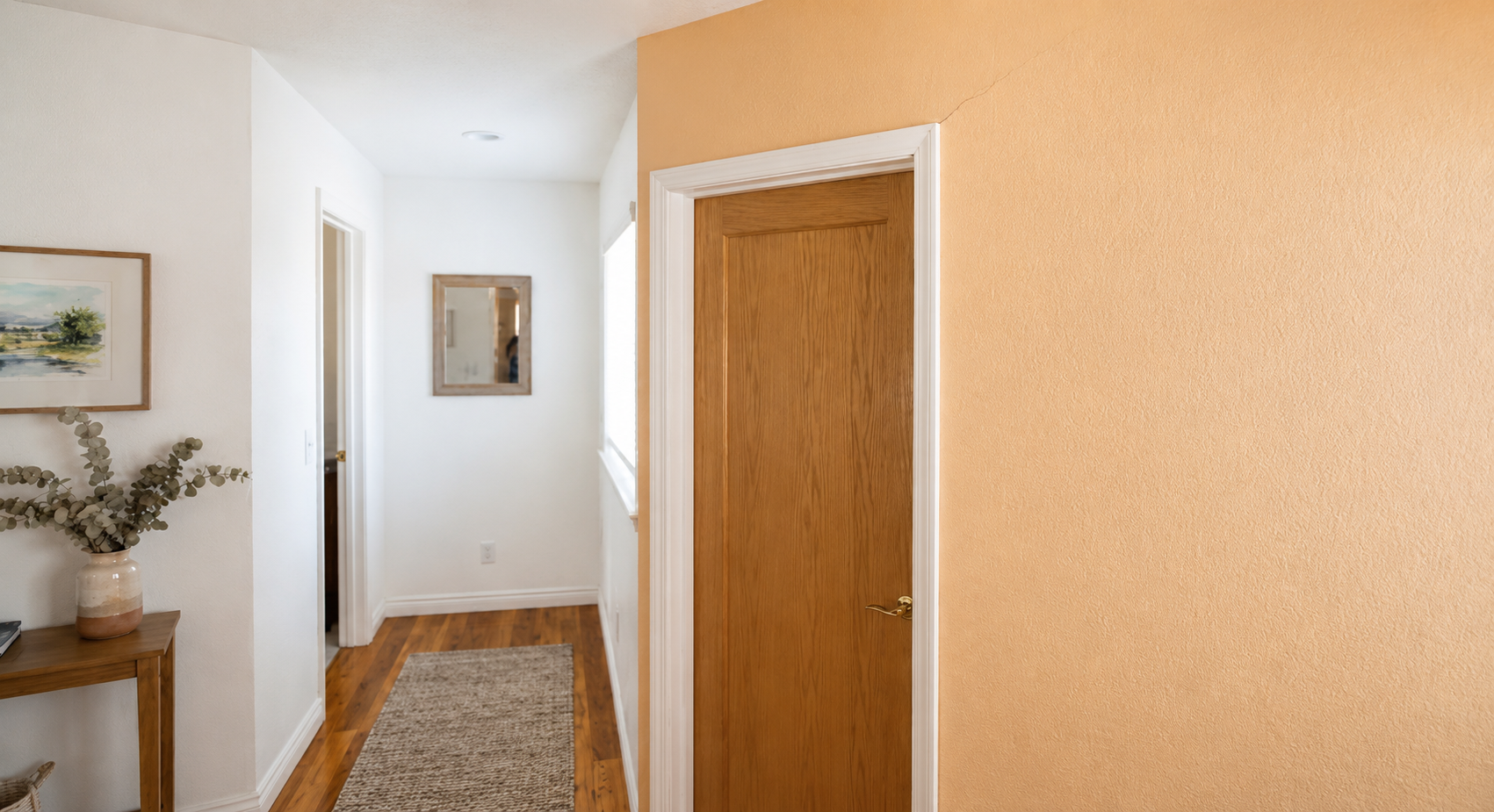
Hallway with wooden door, white walls, framed art, and runner rug.
July 6, 2026
Hairline cracks above doorways are due to settling. Get expert drywall repair to prevent future issues. Contact us today!
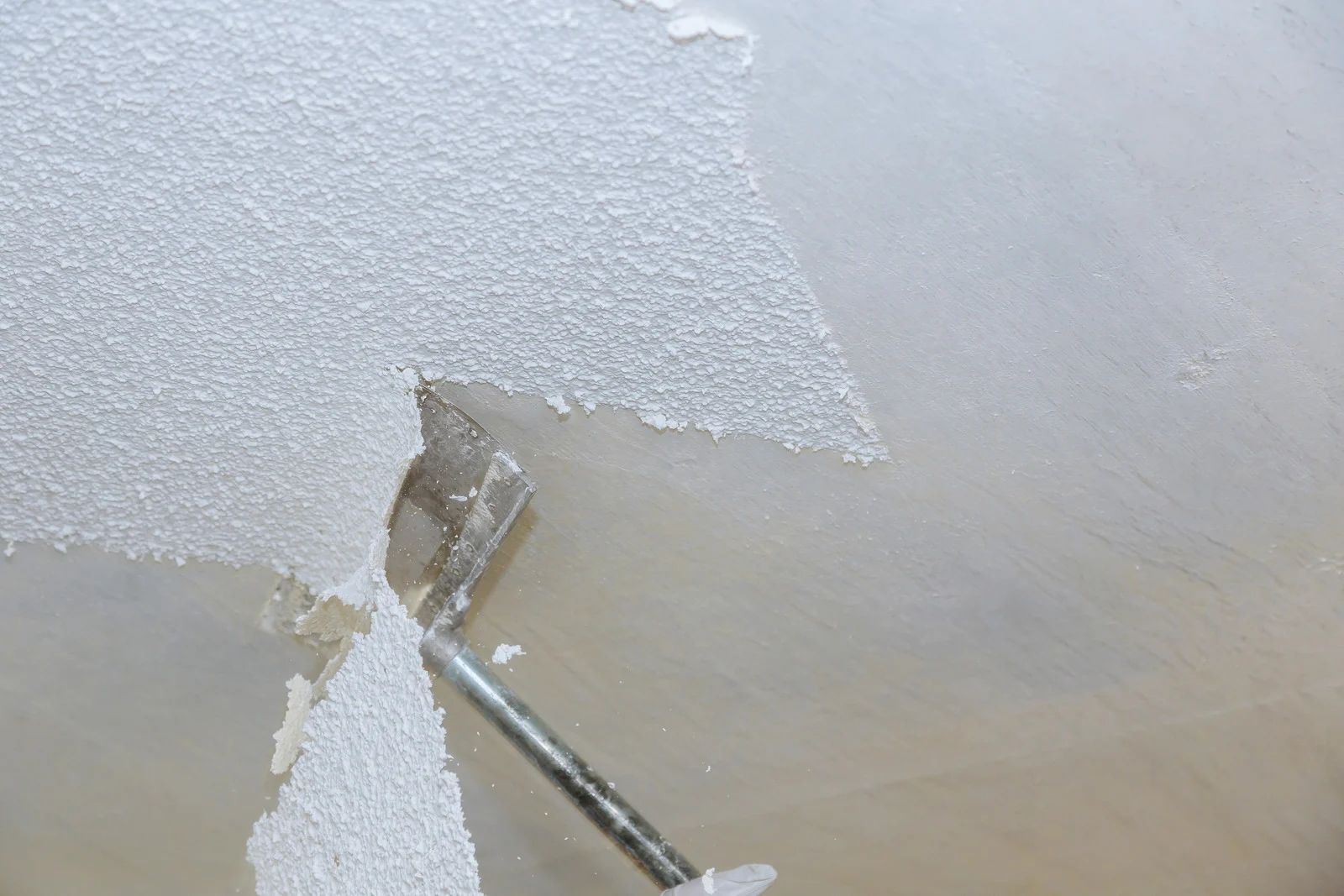
Paint roller applying white paint to a ceiling edge with a patch of peeled paint
June 15, 2026
Walk into an older home and you will almost certainly spot it overhead: a rough, bumpy ceiling texture that looks like cottage cheese or a field of tiny peaks. Popcorn ceilings, also called acoustic or stucco ceilings, were widely used across American homes from the 1950s through the late 1980s.
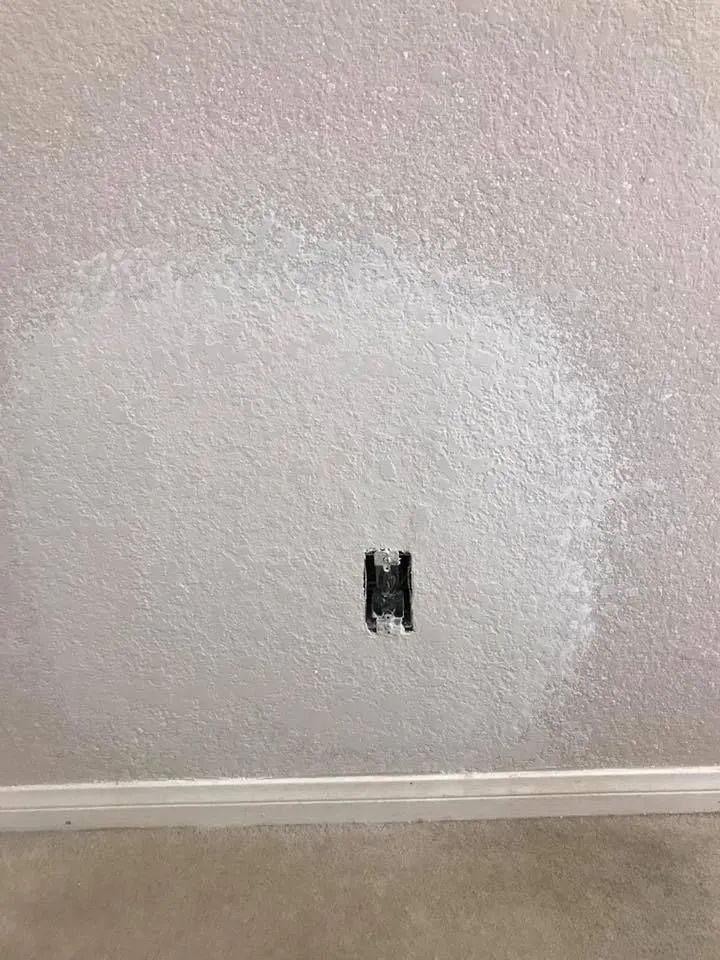
Textured beige wall with a small black electrical outlet opening near the floor.
May 30, 2026
Wall texture plays a major role in the overall appearance of any residential or commercial interior. Even small drywall repairs can become highly noticeable when the surrounding texture does not blend properly with the existing surface.
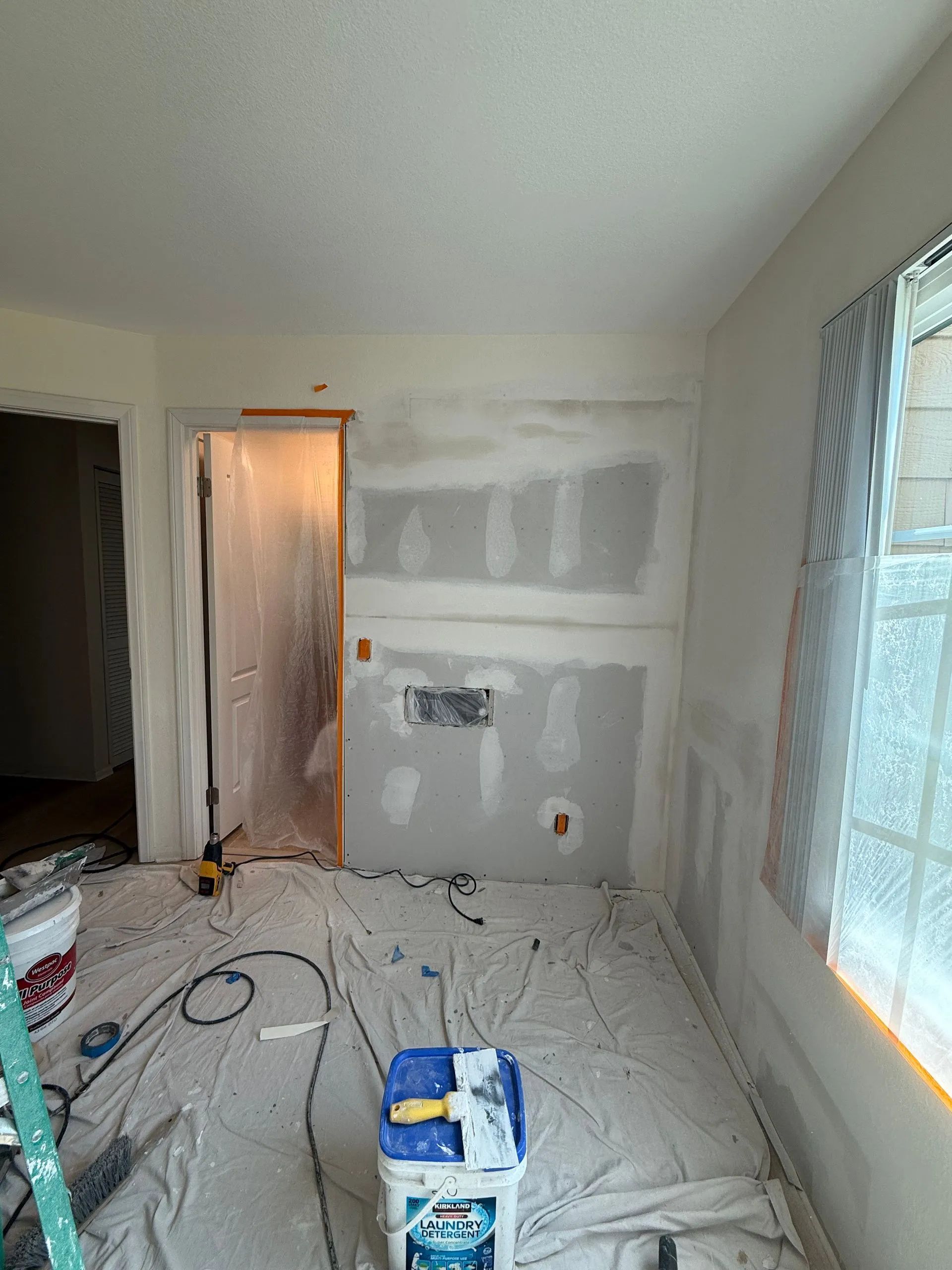
An interior room under renovation with drywall patches on the wall, drop cloths on the floor, and painting supplies.
April 17, 2026
Drywall issues are among the most common interior problems faced in residential and commercial spaces, yet deciding between repair and full replacement is rarely straightforward. Cracks, dents, moisture stains, and structural damage often appear similar on the surface, but the underlying causes can vary significantly.
A wood-framed door with a frosted glass insert, set in a partially painted interior wall next to dark wood cabinets.
March 16, 2026
Drywall finishing, the process of taping, mudding, and sanding seams to create smooth, flawless walls, may appear straightforward to the casual observer. With a handful of tutorials, basic tools, and a little confidence, many homeowners believe they can achieve professional-quality results on their own. However, drywal
A wall with textured, speckled paint; lower portion is lighter. Dark wood floor and door on the right.
February 18, 2026
When it comes to interior design, the walls of your home or commercial space play a critical role in shaping the overall aesthetic and ambiance. Beyond paint color and finishes, the texture of drywall can dramatically influence the look, feel, and even perception of space within a room.
Empty garage with built-in wooden shelves along the walls, a ladder, and a garage door opener.
January 15, 2026
Garages have long been considered purely functional spaces, often overlooked in home improvement projects. They serve as storage areas, workshops, or vehicle shelters, and their interior aesthetics are frequently neglected.
Person scrapes textured ceiling with a scraper, removing popcorn texture. Beige walls surround.
December 23, 2025
Popcorn ceilings, once a popular architectural trend in the mid-to-late 20th century, have long since fallen out of favor. Initially prized for their ability to hide imperfections, provide sound insulation, and offer a textured aesthetic, these ceilings now often appear outdated and less practical compared to modern al
Fireplace with black surround, beige wall, and wood floor.
November 19, 2025
When it comes to drywall repair, most homeowners focus on fixing cracks, holes, or water damage. However, the real challenge lies in making the repaired area blend flawlessly with the existing wall. That’s where texture matching comes in.
Show More