Hairline Cracks Reappearing Above the Doorways? Why Settling Keeps Doing It

July 6, 2026

A licensed asbestos inspector or industrial hygienist will collect one or more small samples from the ceiling using proper containment procedures. Those samples are sent to an accredited laboratory that analyzes them under polarized light microscopy. Results are typically returned within a few days and clearly identify whether asbestos fibers are present and at what percentage.


Homeowners should never attempt to collect samples themselves. Improper sampling can release fibers into the home and expose occupants to the very risk they were trying to assess.

Quick Answer: Hairline cracks that keep returning above a doorway almost always trace back to house settling. The top corner of a door opening is a built-in weak point in the wall, so as the framing shifts and the wood swells and shrinks with the seasons, stress concentrates right there and the drywall tears along the path of least resistance. A basic fill-and-paint patch covers the line but not the movement underneath, which is why it reopens. A lasting repair reinforces the joint so it can ride out the movement instead of splitting again.


You painted over that thin line above the bedroom door last spring, and here it is again, running up and to one side from the corner of the frame. Maybe there is a matching one over the hallway door, or the closet. You fill it, sand it, touch up the paint, and within a few months the crack ghosts back through like it never left. It is one of the most frustrating things a wall can do, because it feels like the repair failed when the real story is happening behind the drywall.


Cracks above doorways are one of the most common calls in older and newer homes alike across inland San Diego County, and the reason they keep reappearing is almost never bad patching. It is movement. A door opening interrupts the continuous surface of a wall, and that interruption creates a stress point that the rest of the wall does not have. Once you understand what is loading that corner and why the season keeps feeding it, the repeating crack stops being a mystery and starts being something you can actually stop.

Why the Corner of a Doorway Is a Weak Point

Think about how a wall is framed. Above a door, a horizontal beam called a header carries the load that would otherwise sit where the opening is. The drywall gets hung over that framing, and the panels are cut and pieced around the opening. That means there is almost always a seam, a joint, or a short run of board right at the upper corner of the door.


A corner of an opening is what engineers call a stress concentration point. When any force moves through the wall, whether it is the house settling, the framing flexing, or the wood shifting with humidity, that force does not spread out evenly. It funnels toward the re-entrant corner at the top of the door frame and finds the nearest joint or edge to relieve itself. Drywall is rigid and not very good at stretching, so instead of bending, it splits. That is why the crack almost always starts at the corner of the frame and angles up and away rather than appearing in the middle of a blank wall.


Home inspectors see this so often it is close to a rule of thumb. A moderate diagonal crack over an interior door is treated as a settlement crack the vast majority of the time, and the direction it points usually shows which way the floor or framing has moved. That is useful information, because it tells you the crack is a symptom of something structural doing exactly what houses do, not a sign your drywall was installed wrong.

What Settling Actually Means for Your Walls

Settling is the slow, mostly normal process of a house adjusting onto its foundation and soil over time. As the structure settles, slight shifts move through the framing, and those shifts show up as small cracks in the drywall or plaster, most readily at the weak points like door and window corners. Both new and older homes do it. A newer home tends to settle more noticeably in its first few years as materials adjust and dry out, while an older home has usually done most of its settling but can still move with soil and moisture changes.


In this part of California, the soil does a lot of the work. Inland San Diego County has expansive clay soils in many areas, and expansive soil swells when it takes on moisture and shrinks when it dries out. Through a wet winter and a long dry summer, the ground under a foundation can lift and drop through the seasons, and the house rides that movement. Each cycle nudges the framing, and each nudge loads those door corners again. That is why a crack you fixed in one season can be back by the next.


None of that means the sky is falling. The everyday hairline crack from settling is a cosmetic problem, not a structural emergency. A hairline crack is less than about a millimeter wide, roughly the width of a human hair, and it is the most common type of drywall crack there is. It becomes worth a closer look only when it changes character, which is covered further down.

Why the Quick Fill-and-Paint Keeps Failing

Here is the heart of it. When you dig out a hairline crack, smear joint compound into it, sand it flush, and paint, you have filled the gap but changed nothing about the movement underneath. Joint compound is essentially gypsum paste. It is rigid when it dries, it has no meaningful ability to stretch, and it has nothing spanning the joint to hold the two sides together. The next time the framing moves and that corner loads up, the compound simply tears again along the same line, usually within a season or two. You did not do the repair wrong. The method itself cannot survive movement.


Filling a moving crack with more of the same rigid material is like taping a torn seam without restitching it. The bridge has to be able to carry the load, and a smear of mud across a live joint cannot. This is exactly why the same hairline reappears in the same spot year after year, and why homeowners assume the patching was the problem when the patching was never the issue.


There is a second reason these DIY patches announce themselves even before they recrack, and it has to do with the wall surface. Most walls carry a texture, whether it is a light orange peel, a knockdown, or a hand finish. A flat troweled patch over a crack leaves a smooth streak that catches light differently than the texture around it, so even a patch that holds shows up as a shiny scar under a lamp or morning sun. A repair that lasts has to solve both the movement and the finish.

How a Lasting Repair Actually Handles the Movement

A repair built to outlast the seasons treats the crack as a live joint, not a scratch to fill. The idea is to reinforce across the crack with something that bridges and holds the two sides, then rebuild the surface so the fix disappears.


The crack gets opened slightly along its length, often with a light V-groove, so there is room for fresh compound to key in rather than sitting on top of old paint. Then a bridging tape spans the joint. For a high-movement location like a door corner, many finishers reach for paper tape or a fiberglass mat reinforcing tape bedded in compound rather than relying on a thin smear alone, because a reinforced joint resists reopening far better than mud by itself. The tape is embedded in a first coat of compound, then covered with two or three progressively wider coats, each feathered out past the last so there is no ridge. Each coat has to dry before the next, which is a big part of why a proper repair is not a same-hour job.


Once the joint is built up and sanded smooth, the surface still has to be blended into the surrounding texture. The existing finish gets read and matched, whether that means knocking down a fresh spray, rolling an orange peel, or hand-working a trowel pattern, so the repaired band reflects light the same way as the rest of the wall. Only then does primer and paint go on. When the movement is bridged and the texture is matched, the crack has a real chance of staying gone even as the house keeps doing what houses do.


For cracks that keep returning because the corner is a chronic hot spot, an experienced finisher may also address the joint detail itself, since a joint that lands right at the stressed corner is more prone to recracking than one handled with proper reinforcement. The goal is always the same, to give that corner a repair that can ride the seasonal movement instead of fighting it.

Frequently Asked Questions

  • Why does the same crack keep coming back over my door even after I patch it?

    Because simple patching only fills the surface while the underlying framing continues to move with seasonal expansion, humidity changes, and settling. Without reinforcement across the joint, the stress reopens the same crack repeatedly over time.

  • Are hairline cracks above my doorways a sign of a serious foundation problem?

    Hairline cracks above doors are usually normal settling and seasonal movement in framing and drywall. They are typically not structural unless they widen significantly, spread in patterns, or coincide with sticking doors or uneven floors.

  • Why do these cracks seem to come back with the seasons?

    Seasonal humidity changes cause wood framing to expand and contract, while soil and structural settling adds slow movement. These combined forces repeatedly stress the same weak points, causing cracks to reappear in predictable cycles yearly.

  • Can I just use spackle or caulk to fix it permanently?

    Spackle or caulk can temporarily hide cracks but will not last because they do not reinforce the joint or allow movement. As the structure shifts, the repair eventually breaks and the crack returns again later.

  • Why does my patched spot show even when the crack has not come back yet?

    Even after repair, patched areas can remain visible because joint compound changes surface texture and reflects light differently than surrounding paint or drywall finish, especially under raking light or inconsistent wall finishes in certain lighting.

  • Should I wait for the house to stop settling before repairing the cracks?

    You do not necessarily need to wait for a house to fully settle before repairing cracks, because most homes continue minor seasonal movement. However, active widening cracks should be evaluated before cosmetic repairs are done.

Getting the Crack to Actually Stay Gone

A hairline crack that keeps returning above your doorway is not a failed patch. It is a wall telling you that the top corner of the opening is a stress point, and that settling and the seasonal humidity swing keep aiming their movement right at it. Fill-and-paint covers the symptom while the cause keeps working underneath, which is why the same line ghosts back season after season. The way to break that cycle is a repair that bridges the joint, rides the movement, and blends the texture so the fix truly disappears.


Stop repatching the same line and get it fixed for good — When a crack keeps reopening above your door, the answer is a repair that reinforces the stressed corner, spans the joint so it can move without tearing, and matches your wall texture so nothing shows. With 20 years of hands-on experience across Ramona, California and the surrounding region, Gabe's Drywall reads how your home is settling, repairs the crack the right way with proper reinforcement and a finished texture match, and flags anything that points to movement worth watching before the work goes on. Reach out to Gabe's Drywall to schedule a drywall crack repair and get a doorway that finally stays smooth.

Paint roller applying white paint to a ceiling edge with a patch of peeled paint
June 15, 2026
Walk into an older home and you will almost certainly spot it overhead: a rough, bumpy ceiling texture that looks like cottage cheese or a field of tiny peaks. Popcorn ceilings, also called acoustic or stucco ceilings, were widely used across American homes from the 1950s through the late 1980s.
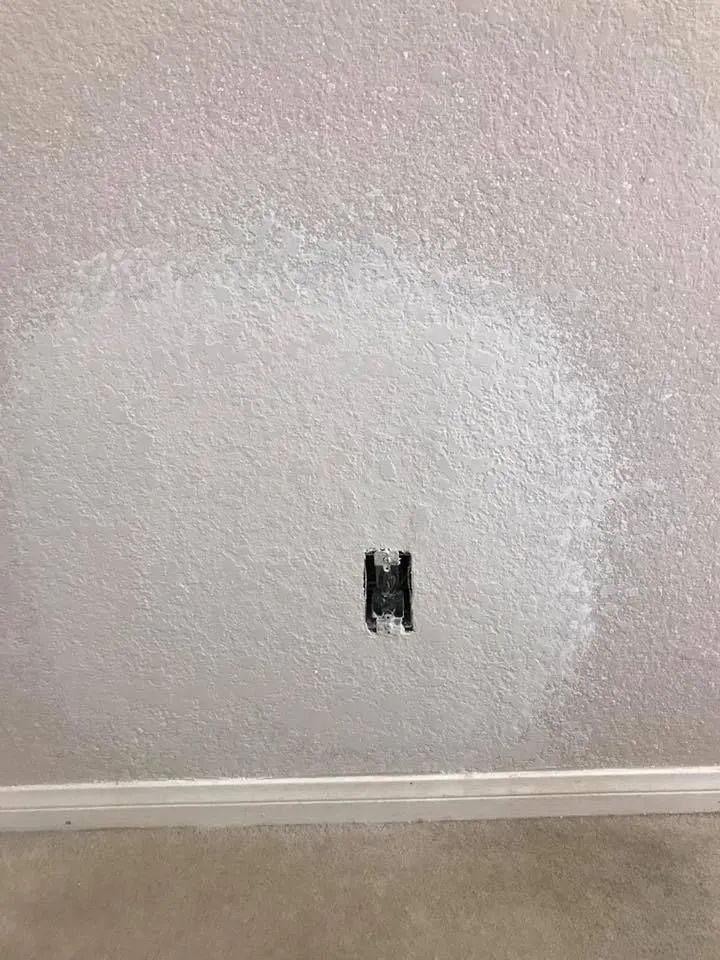
Textured beige wall with a small black electrical outlet opening near the floor.
May 30, 2026
Wall texture plays a major role in the overall appearance of any residential or commercial interior. Even small drywall repairs can become highly noticeable when the surrounding texture does not blend properly with the existing surface.
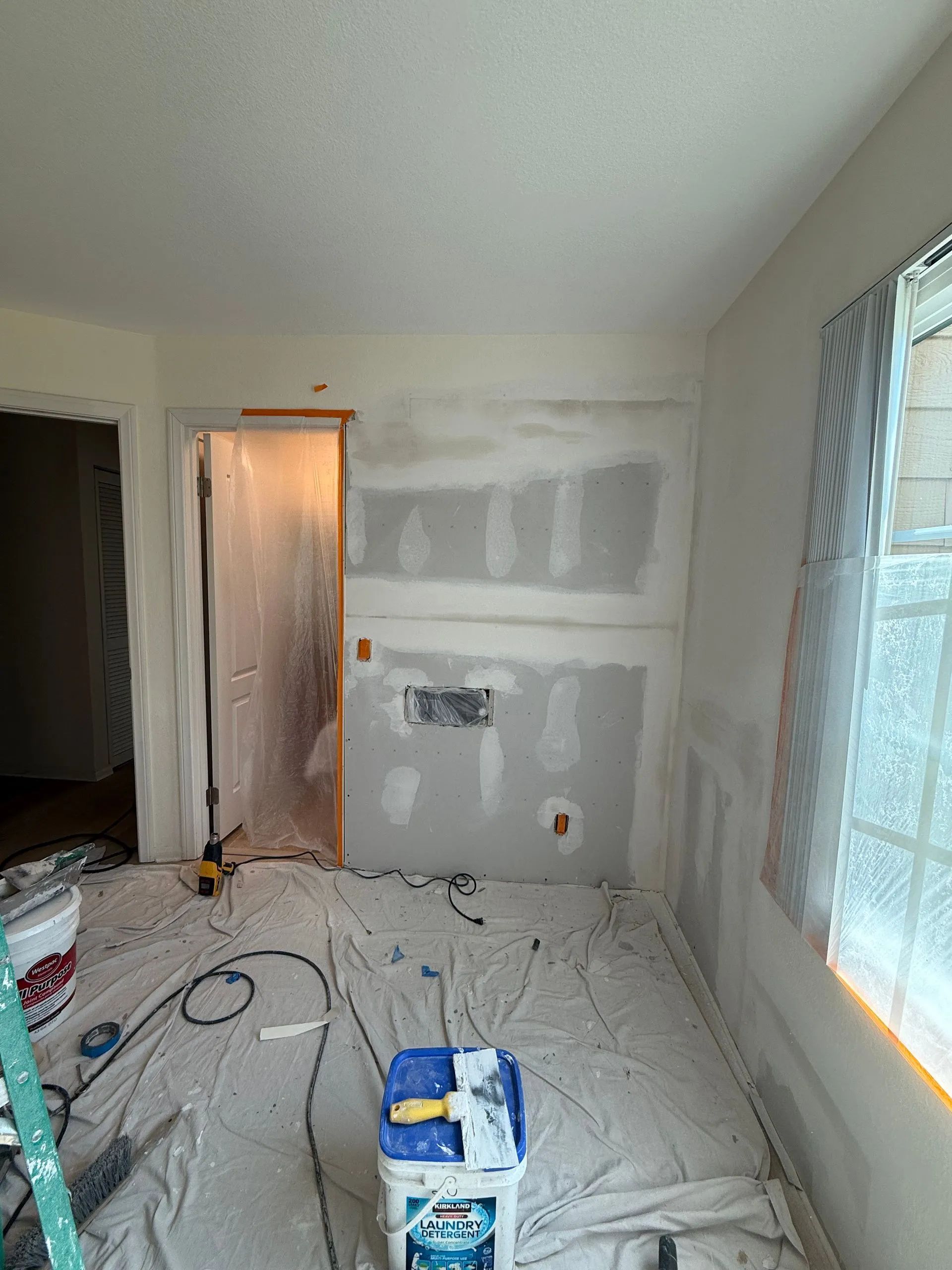
An interior room under renovation with drywall patches on the wall, drop cloths on the floor, and painting supplies.
April 17, 2026
Drywall issues are among the most common interior problems faced in residential and commercial spaces, yet deciding between repair and full replacement is rarely straightforward. Cracks, dents, moisture stains, and structural damage often appear similar on the surface, but the underlying causes can vary significantly.
A wood-framed door with a frosted glass insert, set in a partially painted interior wall next to dark wood cabinets.
March 16, 2026
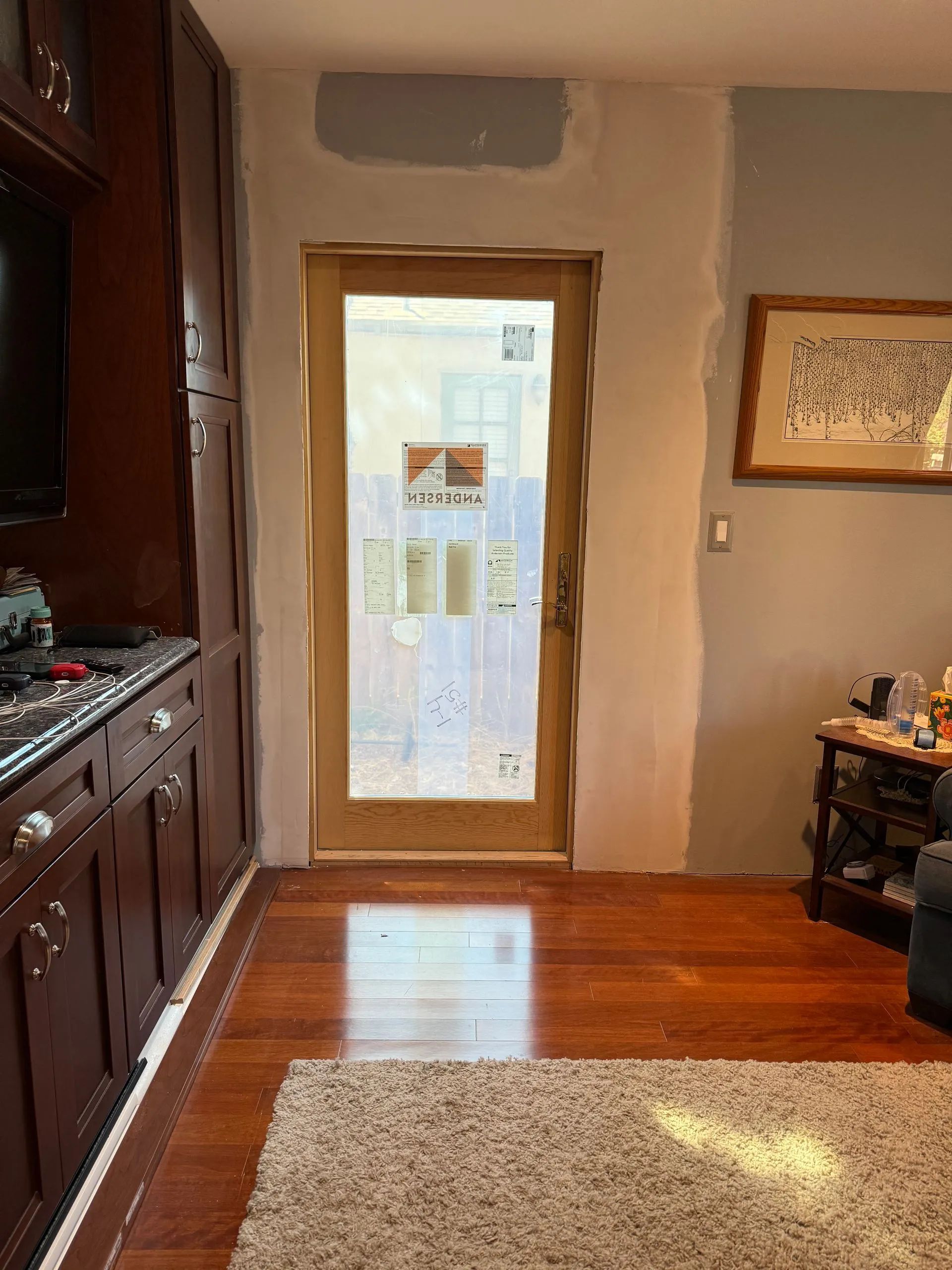
Drywall finishing, the process of taping, mudding, and sanding seams to create smooth, flawless walls, may appear straightforward to the casual observer. With a handful of tutorials, basic tools, and a little confidence, many homeowners believe they can achieve professional-quality results on their own. However, drywal
A wall with textured, speckled paint; lower portion is lighter. Dark wood floor and door on the right.
February 18, 2026
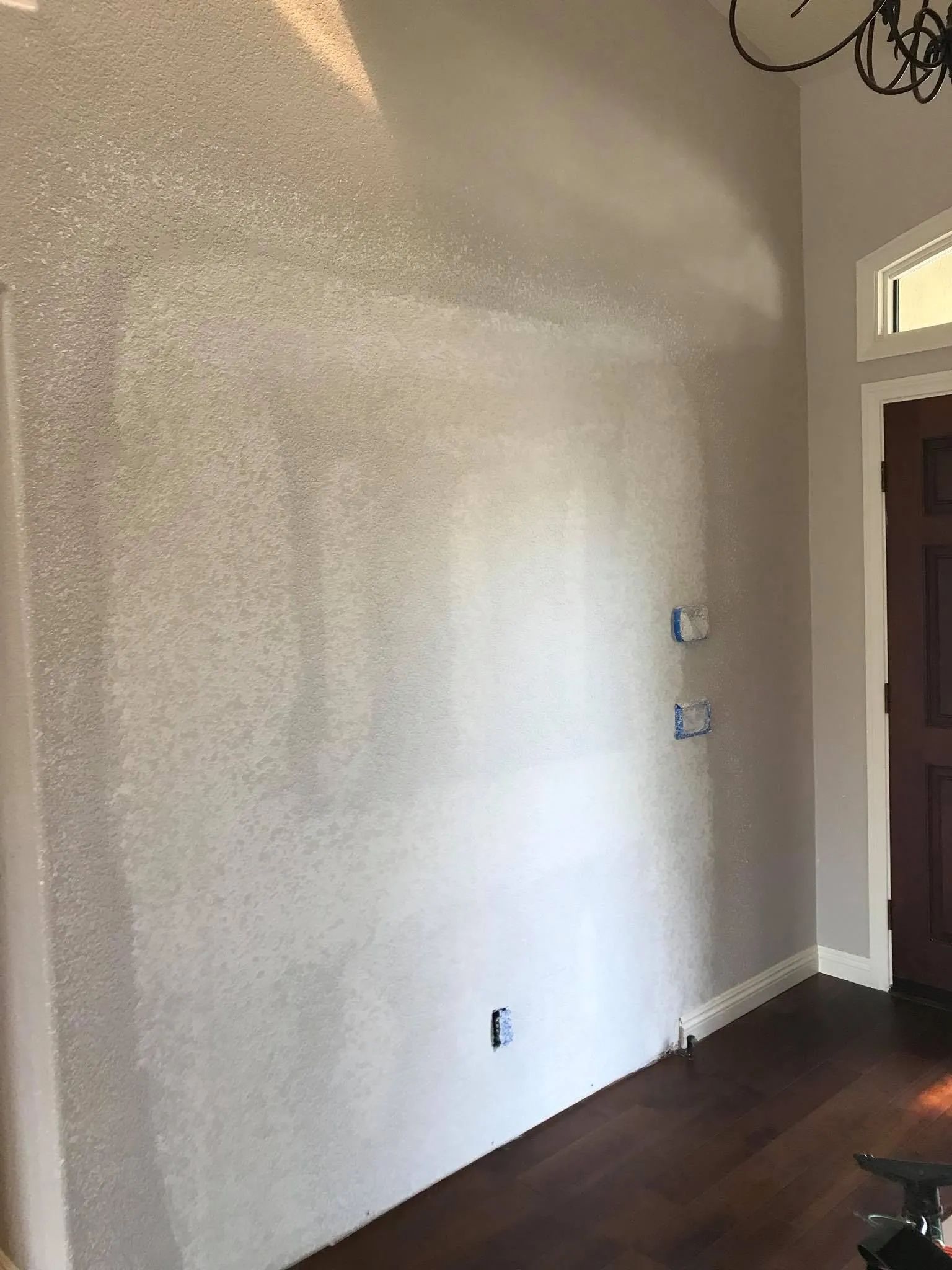
When it comes to interior design, the walls of your home or commercial space play a critical role in shaping the overall aesthetic and ambiance. Beyond paint color and finishes, the texture of drywall can dramatically influence the look, feel, and even perception of space within a room.
Empty garage with built-in wooden shelves along the walls, a ladder, and a garage door opener.
January 15, 2026
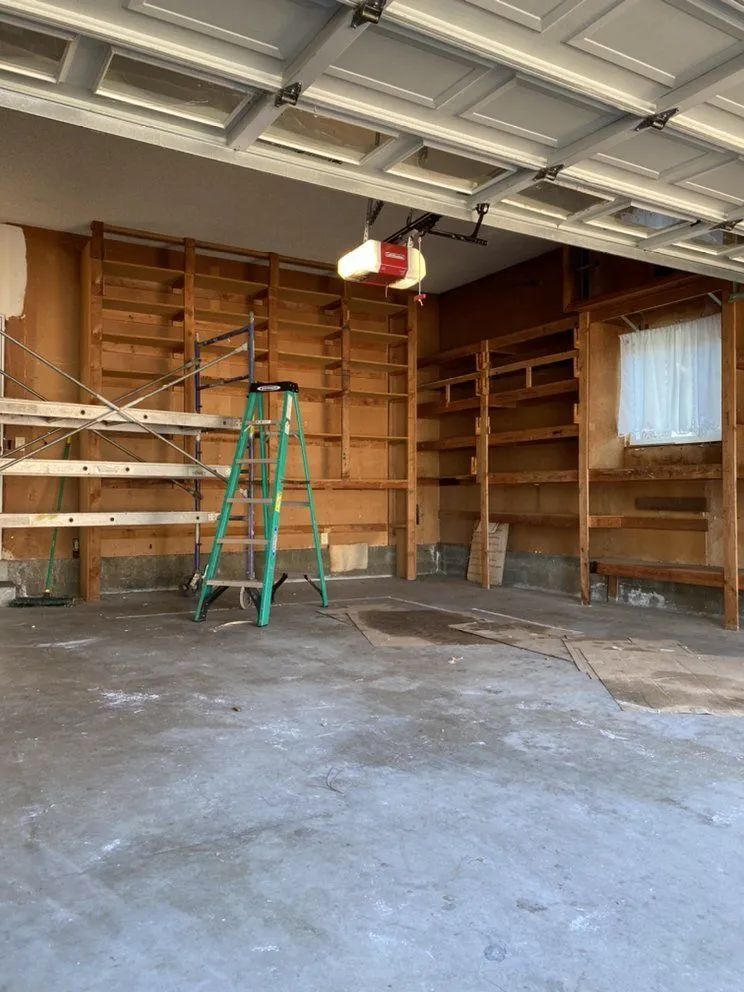
Garages have long been considered purely functional spaces, often overlooked in home improvement projects. They serve as storage areas, workshops, or vehicle shelters, and their interior aesthetics are frequently neglected.
Person scrapes textured ceiling with a scraper, removing popcorn texture. Beige walls surround.
December 23, 2025
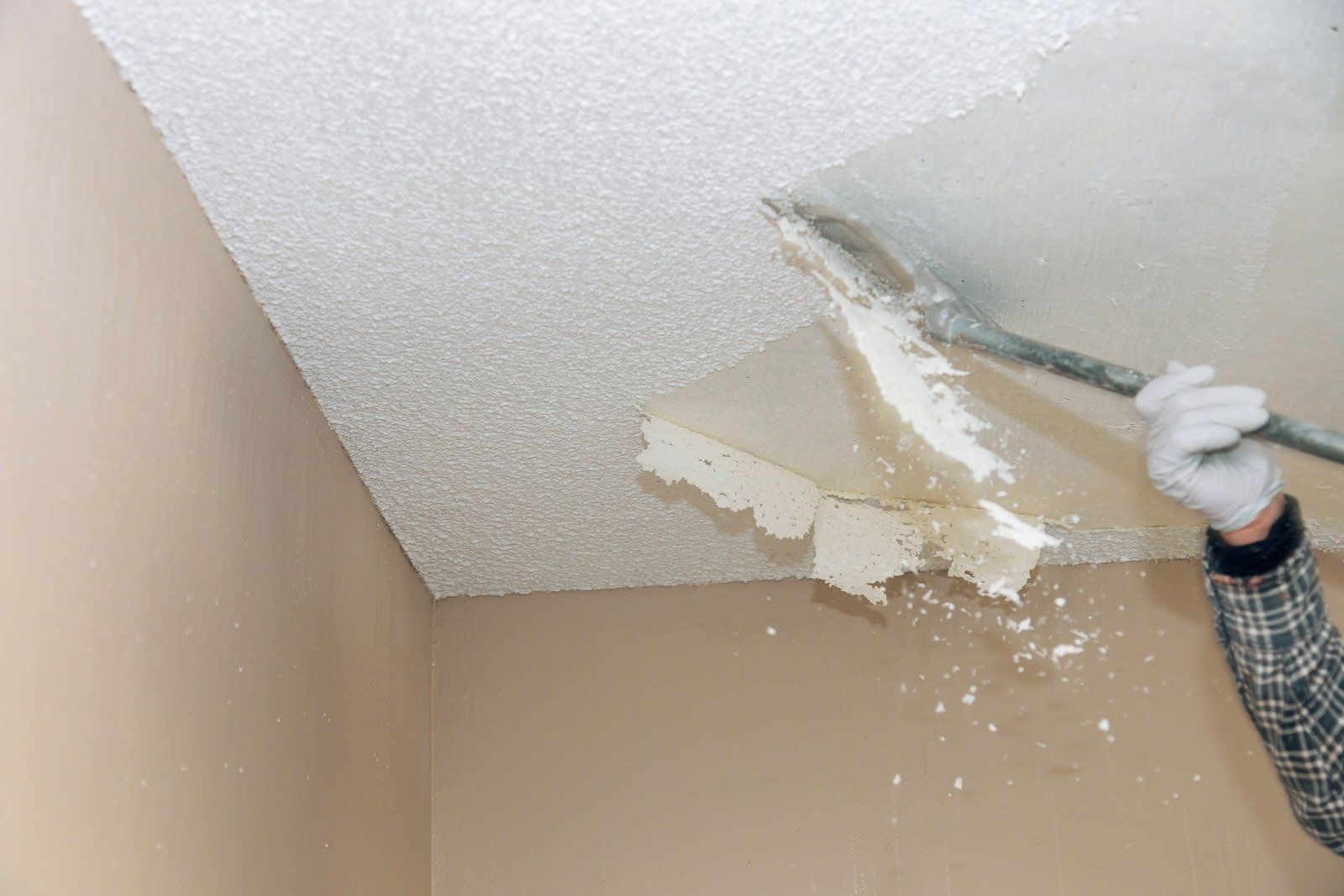
Popcorn ceilings, once a popular architectural trend in the mid-to-late 20th century, have long since fallen out of favor. Initially prized for their ability to hide imperfections, provide sound insulation, and offer a textured aesthetic, these ceilings now often appear outdated and less practical compared to modern al
Fireplace with black surround, beige wall, and wood floor.
November 19, 2025
When it comes to drywall repair, most homeowners focus on fixing cracks, holes, or water damage. However, the real challenge lies in making the repaired area blend flawlessly with the existing wall. That’s where texture matching comes in.
Interior room with unfinished drywall on walls and ceiling; window and concrete floor.
October 15, 2025
Drywall may seem like a passive part of your home, but it’s quietly doing a lot, supporting paint, insulation, soundproofing, and even structural integrity. Over time, though, even the best drywall can develop problems that shouldn’t be ignored.
Show More